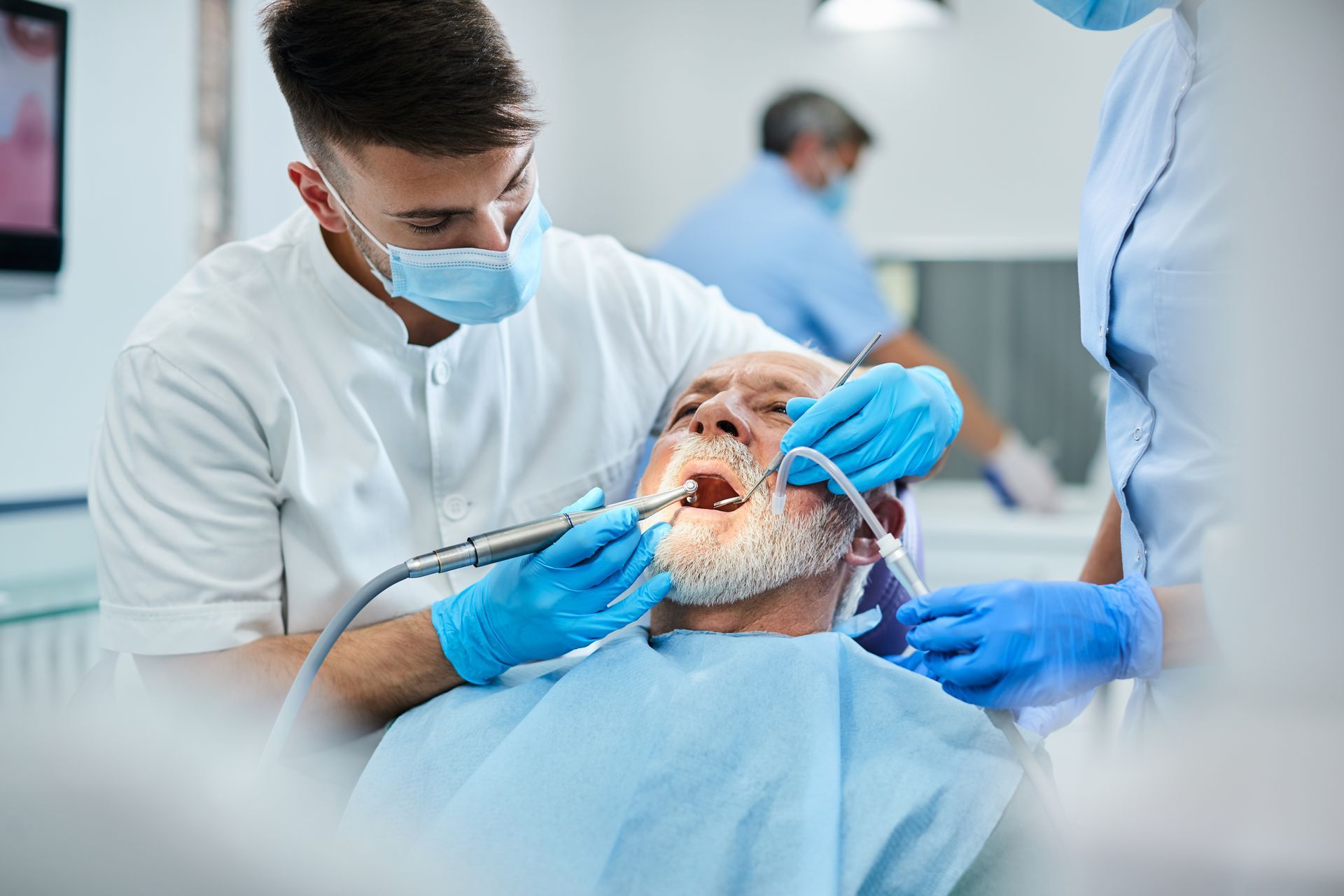
What Happens When I Forget to Floss?

June 18, 2019
Our team strongly encourages everyone to floss daily, but do you ever wonder why? Well, flossing is vital for top-notch oral health and smiles. It can help you and your oral health in more ways than you might realize. This means that if you forget to floss, your smile can also suffer. Forgetting to floss can:

– Leave your smile vulnerable to developing cavities: If you don’t remove food particles, plaque, bacteria and other harmful substances from between teeth, they can attack the tooth enamel and create a hole in the surface, creating what is known as a cavity. The cavity can affect one or more teeth and can spread, infecting multiple layers of the teeth. If you’re not careful, it can affect the tooth nerve, tooth pulp and even the root canal.

– Make you fall victim to gum disease: If you don’t remove plaque from the surfaces of the teeth as well as from the gumline, it can severely affect the gums. In fact, it can irritate and infect the gums to make them swell and bleed. It can also turn into tartar and make the gums recede from the base of the teeth. As time passes, that tartar can spread to the jawbone and deteriorate it, causing loose and even lost teeth. It’s very important to remove plaque daily before it affects the gums.

– Compromise the entire health of your body: If you don’t treat your gum disease quickly, it can contribute to serious health issues like heart disease, diabetes, stroke, respiratory disease and rheumatoid arthritis.

When it comes to proper flossing, some tips we have include the following:

– Use about 16-18 inches of floss and wind most of it around your middle fingers
– Using your thumbs and index fingers, gently use back-and-forth motions to slide the floss between your teeth (avoid snapping the floss onto your gums)
– Following the curves of your teeth, gently floss between each tooth and along the gums
– As you move between each tooth, use a clean area of the floss
– Keep floss or travel floss picks on hand for when you get food particles stuck during the day

Proper flossing helps you not only achieve better oral and overall health but can help avoid costly treatments. If you do need a specific treatment, our team will help you find the most cost-effective solution.

Make sure to floss regularly and at least once a day! That way, you can have the top-notch smile and oral health you deserve. To learn more about flossing, please reach out and talk to a member of our team. We will be more than happy to give you and your family the answers and information that you need for a great smile!
A child with a toy sits in a dental chair as a dentist prepares a check up.
May 29, 2026
Manage dental anxiety with a trusted family dentist in Palos Heights, IL. Call Arel C. Ondoy, DMD, at 708-535-0333 today for gentle care.

Dental professional showing a toothbrush to a patient while another adult stands nearby.
March 16, 2026
Trusted family dentist in Palos Heights, IL. Arel C Ondoy DMD supports total wellness. Call 708-535-0333 today.

Pediatric Dentist
January 5, 2026
Arel C. Ondoy, DMD provides expert tips for maintaining your child’s dental health with the best pediatric dentist in Palos Heights, IL. Schedule a visit today and ensure your child’s smile stays healthy and bright.
Child Dentist
November 5, 2025
Learn how a family dentist in Palos Heights can help you maintain lifelong oral health. Arel C. Ondoy, DMD offers comprehensive care for your family’s dental needs. Book your appointment today!

How Regular Visits to a Family Dentist Prevent Bigger Issues
August 28, 2025
Find out why visiting a family dentist is essential for your health. Arel C. Ondoy, DMD provides tips for making your trips to the dentist enjoyable and stress-free for everyone.
Dentist Right Away
By admin July 10, 2025
Discover the signs you need to see a dentist in Palos Heights, IL. Arel C. Ondoy, DMD general dentist shares important tips to keep your smile healthy. Schedule a consultation today!
January 15, 2020
Kick off the new year by tackling bad breath. Visit Arel C. Ondoy, DMD for effective treatments to improve your oral health and boost your self-confidence with fresh breath!
December 20, 2019
Protect your mouth this winter! Limit sugary foods, eat healthy, and wear an athletic guard to prevent cavities. Visit Arel C. Ondoy, DMD for expert advice on winter dental care.
November 12, 2019
Celebrate healthy teeth with a balanced diet! Learn how eating healthy foods and drinks can benefit your teeth and gums. Visit Arel C. Ondoy, DMD to improve your oral health today.
October 18, 2019
Happy October, everyone! It’s one of the spookiest seasons of the year, and one of the scariest things we can think of is having problems with our teeth and gums. Since October is National Dental Hygiene Month, we want to promote a healthy mouth for everyone by acknowledging the importance of your daily hygiene efforts. Healthy teeth and gums are the foundation of a healthy, beautiful smile! Plaque The mouth is full of living bacteria, some of which feed and thrive on carbohydrates and sugary drinks. These can release acids mixed with saliva and food particles to create a sticky bacterial film (plaque). As plaque builds up, it attacks and weakens tooth enamel, working its way through the softer dentin and tooth pulp below it to create decay and cavities. Teeth with extensive decay often require a root canal treatment to save the tooth from the severe infection that has taken root. A root canal removes the bad bacteria and dead tissue that might otherwise require extracting the tooth. Signs You Might Need a Root Canal – Tooth pain or pain when chewing – Sensitivity to hot and cold food and drinks – Sensitive gums – Gum infection – Darkened or chipped teeth – Swollen lymph nodes – Oral trauma What You Can Do Did you know that the first known bristle toothbrush was invented in China in 1948? Unlike the smooth nylon-bristled brushes we use today, the original toothbrush used boar hairs attached to bamboo or bone handles. We don’t know about you, but we’re grateful for today’s toothbrushes! To prevent damaged teeth, you’ll want to start by protecting your mouth from plaque. For example, drinks like soda, fruit juices, sports drinks, carbonated water and other acidic and sweetened beverages are pretty much a lifeline for oral bacteria that attach your teeth. To lessen plaque, limit these beverages, and when you drink them, use a straw to reduce contact on tooth enamel. Better choices include water, milk, low-sugar vegetable juice, and unsweetened green and black tea. This year’s National Dental Hygiene Awareness Month focuses on four habits you need to practice daily: Brush Brush your teeth twice a day for two minutes each session with a soft-bristled toothbrush (no boars hair!). You want to gently clean them without harming the enamel or soft gum tissues. Make sure the head and shape of the brush fit comfortable in your mouth so you can get to the back areas to remove bacteria and food particles. Hold your brush at a 45-degree angle to your gums. Using short strokes, move your toothbrush back and forth to clean all tooth surfaces – outside, inside and the top of the molars – where the food is chewed. Make sure to clean those grooves and crevices. Use up-and-down-strokes to clean the inside of your front teeth. Tip: Don’t forget to brush your tongue to get rid of plaque and freshen your breath. Floss Clean between your teeth once a day using a flossing tool of choice (one that makes you want to floss every day) to get rid of dental plaque your toothbrush can’t reach. Plaque buildup will cause it to harden into tartar or calculus, which has to be removed by a dental hygienist using special tools. Rinse Some areas of the mouth can’t get rid of plaque by brushing and flossing alone. Rinsing with an antibacterial mouthwash daily destroys bacteria to prevent tooth decay and gum disease (infection of the oral tissue) from gaining hold. Your dentist can recommend a non-alcoholic antimicrobial rinse that is right for your needs. Chew Speaking of dry mouth, did you know that chewing sugarless gum for 20 minutes after you eat lessens the chances of tooth decay? That’s because chewing stimulates saliva glands to promote healthy saliva flow. Your saliva plays a vital role by rinsing away food particles and bacterial debris and neutralizes the acids from oral bacteria. This month is a good time to toss out your old worn-out toothbrush and find a flossing method you will enjoy using every day. You’ll also want to thank your dental hygienist the next time you see them for all their efforts to make your smile the best it can be!